Workflow · 8 min read
A trading day with MoneyHQ: from the open to the journal
A step-by-step routine for using MoneyHQ: read the market, shortlist strong stocks, pick a clean zone, wait for price to come back, size the position, place the stop and review the day in your journal.
Last updated 13 October 2026
MoneyHQ doesn’t tell you what to buy or sell, and an order block isn’t a prediction. Across the sessions we’ve measured, about 4 in 10 first visits to a zone moved away from it; the rest went through or did nothing. So the edge, if there is one, comes from the routine around the zone: trading only clean setups, keeping every loss small and reviewing what you actually did. This guide is that routine, step by step.
Start in Practice mode: it runs a realistic simulated session, so you can rehearse every step below without risking money.
1. Before 09:15: set your limits
Spend five minutes before the open:
- Look at the index strip across the top. A market that is broadly up or broadly down is easier to trade than one that is mixed and choppy. On a mixed day, plan to trade less, or not at all.
- Leave out any stock marked event risk (results, a board meeting, big news). Zones mean little when news moves the price.
- Write down your daily loss limit, for example two losing trades at your normal risk. When you reach it, you stop for the day.
2. 09:15–09:30: let the open settle
The first minutes are the noisiest of the day: opening orders, gaps and fast reversals. The time-of-day band on the stock page marks this as the opening. Watch it, but don’t trade it. Let the first few 5-minute candles form, so the day’s early high and low exist.
3. Shortlist two or three stocks on Market Flow
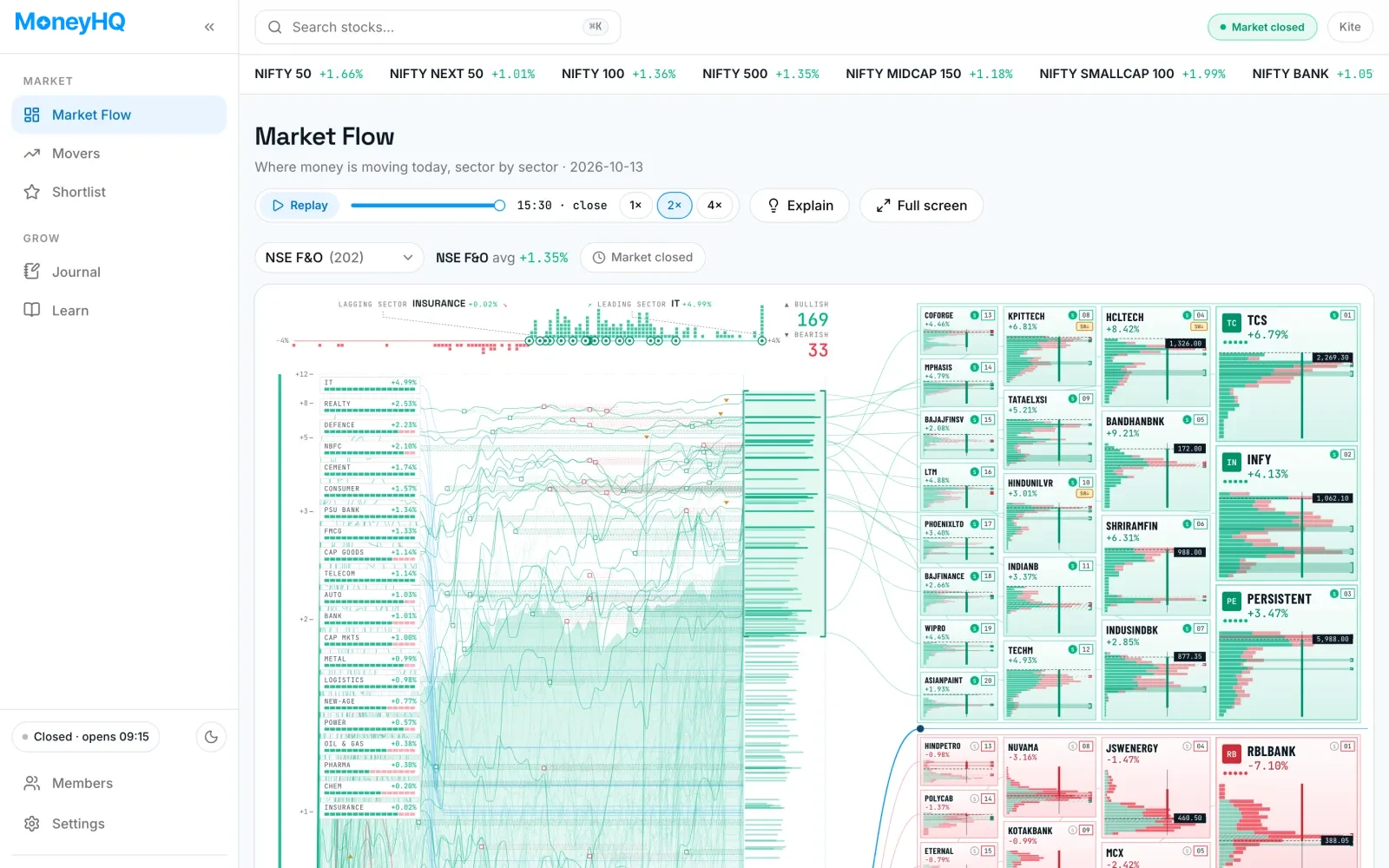
Market Flow shows where money is moving, sector by sector. Look for:
- A high strength score and a clean move in one direction: bullish if you look for longs, bearish for shorts.
- Stocks moving with their sector, rather than alone. A stock whose whole sector agrees is less likely to be one order pushing it around.
- No more than two stocks from one sector, so one sector’s reversal doesn’t hit every position at once.
- No “Thin trading” pill. In a thinly traded stock, a usual 5-minute candle trades under ₹40 lakh, so a single order can create a candle, and a zone.
Star two or three stocks into your Shortlist. That’s enough to watch properly.
4. Pick a clean zone
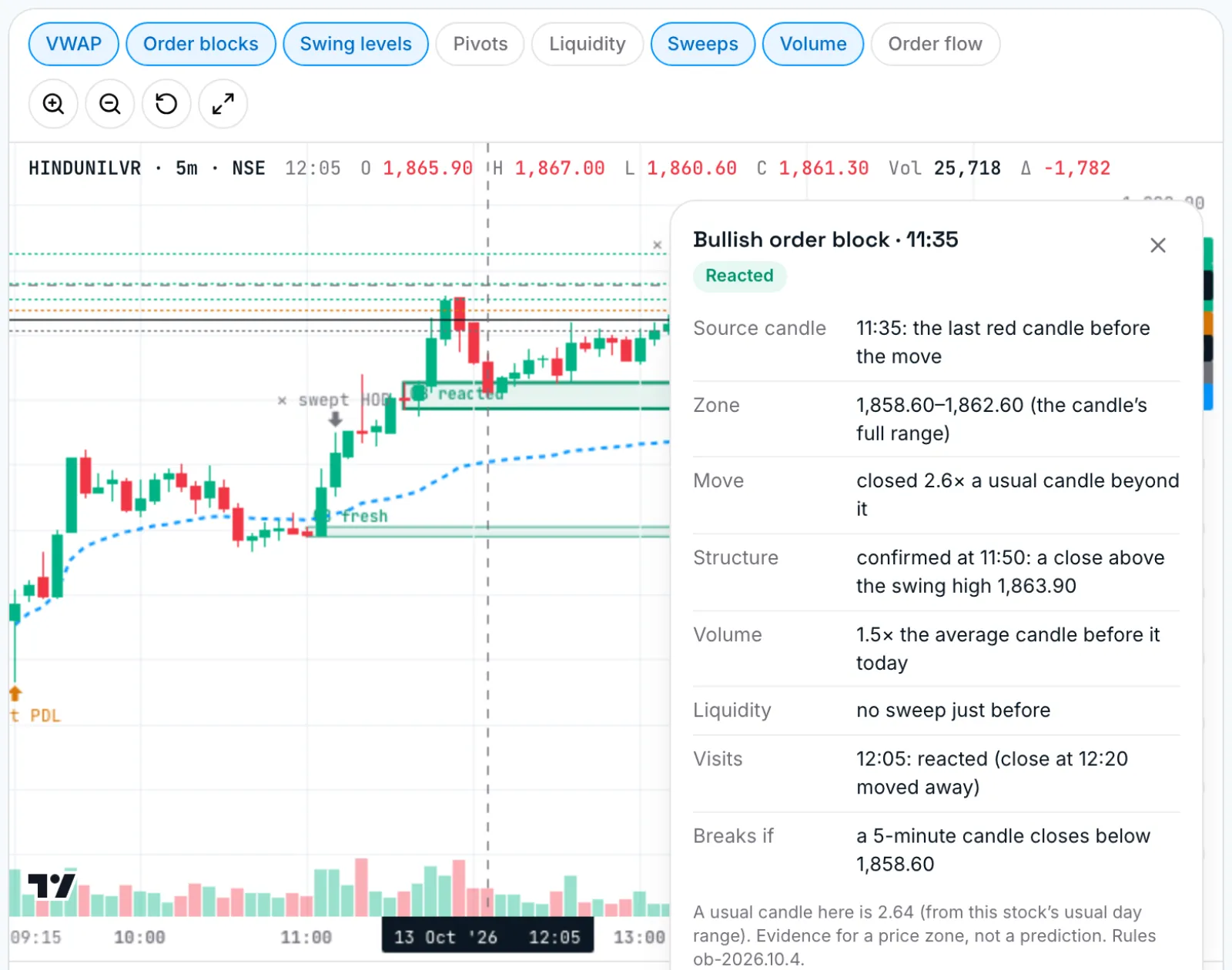
Open the stock and click a zone box on the chart. The Why this zone panel shows the evidence behind it (see order blocks for the full rules). Prefer zones that are:
- Fresh: price hasn’t come back to it yet. Each visit uses up some of the orders that made it.
- Made by a strong move away: the “Move” line. In our data, zones whose move was more than two usual candles reacted on their first visit about half the time, against about a third for moves under half a candle.
- Confirmed by a break of structure: a close beyond a swing high or low.
- Not marked late: zones confirmed in the last half hour have no time left to be tested.
Skip zones that are marked broken, have already been visited several times, or come from a small move.
5. Wait for price to come back
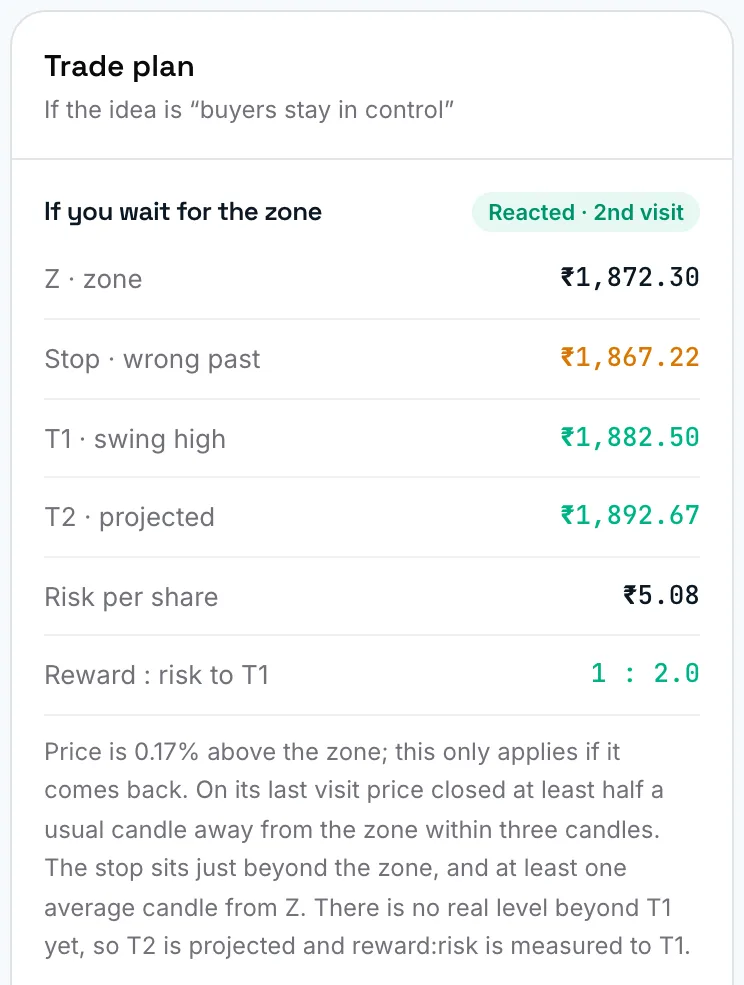
The Trade plan card does the arithmetic. Use If you wait for the zone:
- Z · zone is where you wait. Don’t chase a stock that is already far from it.
- Stop · wrong past is the level that proves the idea wrong: just beyond the zone, and at least one average candle away.
- T1 and T2 are the next levels the move could reach.
- Reward : risk compares the possible move with the possible loss. Below 1 : 2, the trade usually isn’t worth taking.
When price returns, a touch isn’t a signal. Wait for a reaction: a 5-minute candle that closes back away from the zone. While the zone shows testing, the visit isn’t decided yet.
6. Size the position by risk
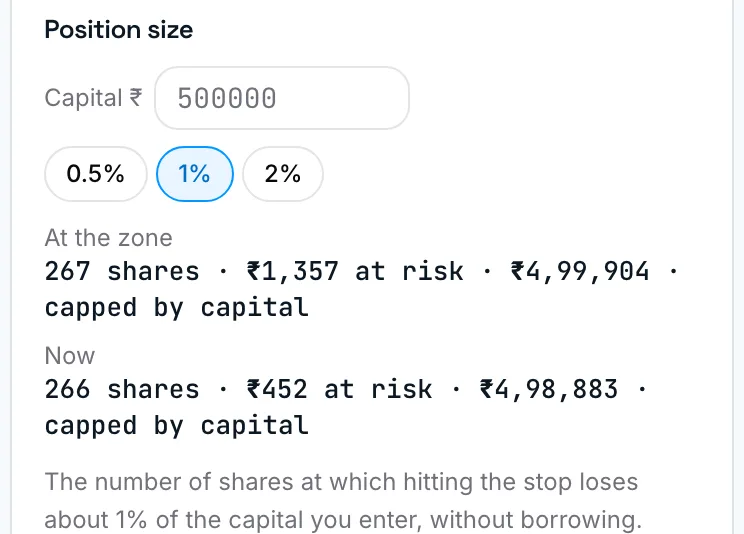
Use the Position size box under the plan. Enter your capital and choose how much of it a stopped-out trade may cost: 0.5–1% is a common range. The quantity then follows from the distance to the stop. A wide stop means fewer shares; a tight stop means more. The money at risk stays the same.
Never size a trade by how many shares you’d like to own.
7. Place the order with the stop
Open in… opens the same stock in your broker’s app or site (set your broker in Settings). Place the entry and the stop-loss order together. A plan without a stop order is only a hope.
8. Manage the trade
- At T1, take part of the position off, or move the stop to your entry price.
- If a candle closes through the zone, the zone is broken and so is the idea: exit, and don’t average down.
- If price does nothing for three or four candles, the setup hasn’t worked, even without a loss. Step aside.
- 11:30 to 13:30 is usually the slowest part of the day. Favour managing open trades over opening new ones, and close intraday positions before the last 15 minutes.
9. After the close: journal it
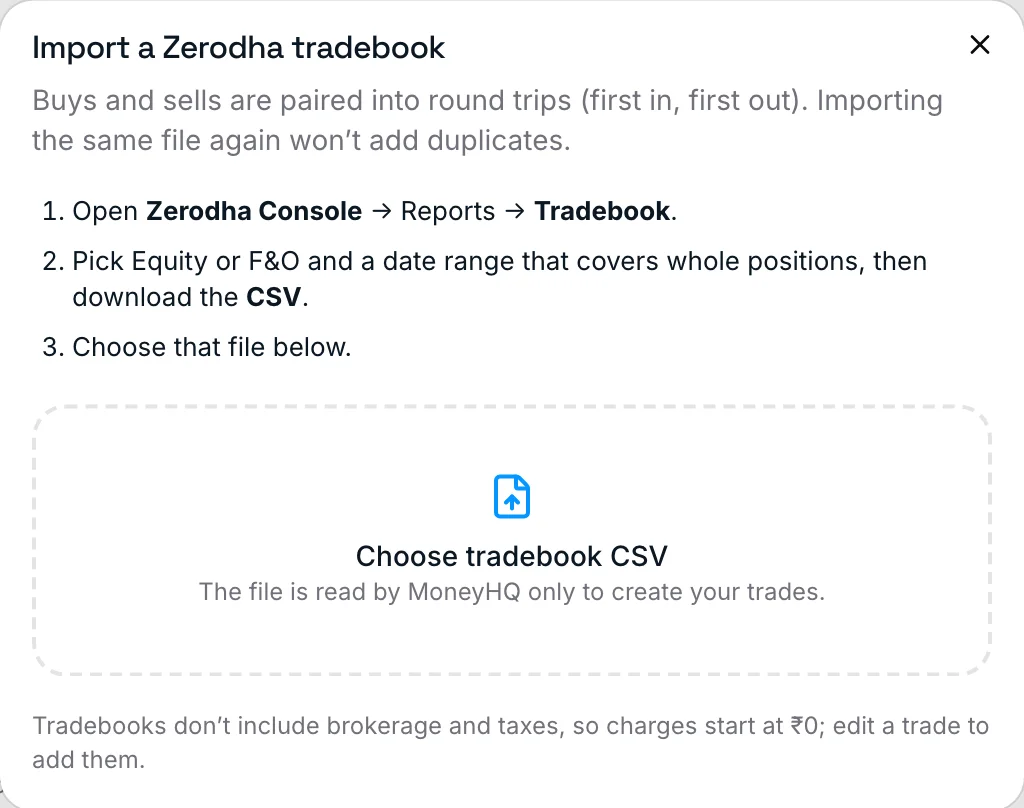
Import your Zerodha tradebook (a CSV from Console) into the Journal, or log each trade from the stock page as you take it, so MoneyHQ keeps the plan as it stood at that moment. Tag each trade with its setup and whether you followed the plan.
Once a week, look at three things:
- Followed plan vs not: the habit that matters most.
- Results by time of day: many traders lose most in one part of the session.
- Expectancy: the average result per trade. Win rate on its own doesn’t tell you whether you make money.
How to start
Run this routine in Practice mode for two or three weeks, or about 30 to 50 trades, and journal every one. Move to real money, in small size, only if your journal shows a positive expectancy and that you followed your own rules. If it doesn’t, the journal shows which step to fix first.
For learning only, not investment advice. Trading carries the risk of loss.
For learning only, not investment advice. Nothing here is a recommendation to buy or sell any security.